
Alan Mulally and the Ford turnaround
Ford had not hired an outsider as CEO in its 103-year history.
 CEO.com
4 min read
CEO.com
4 min read
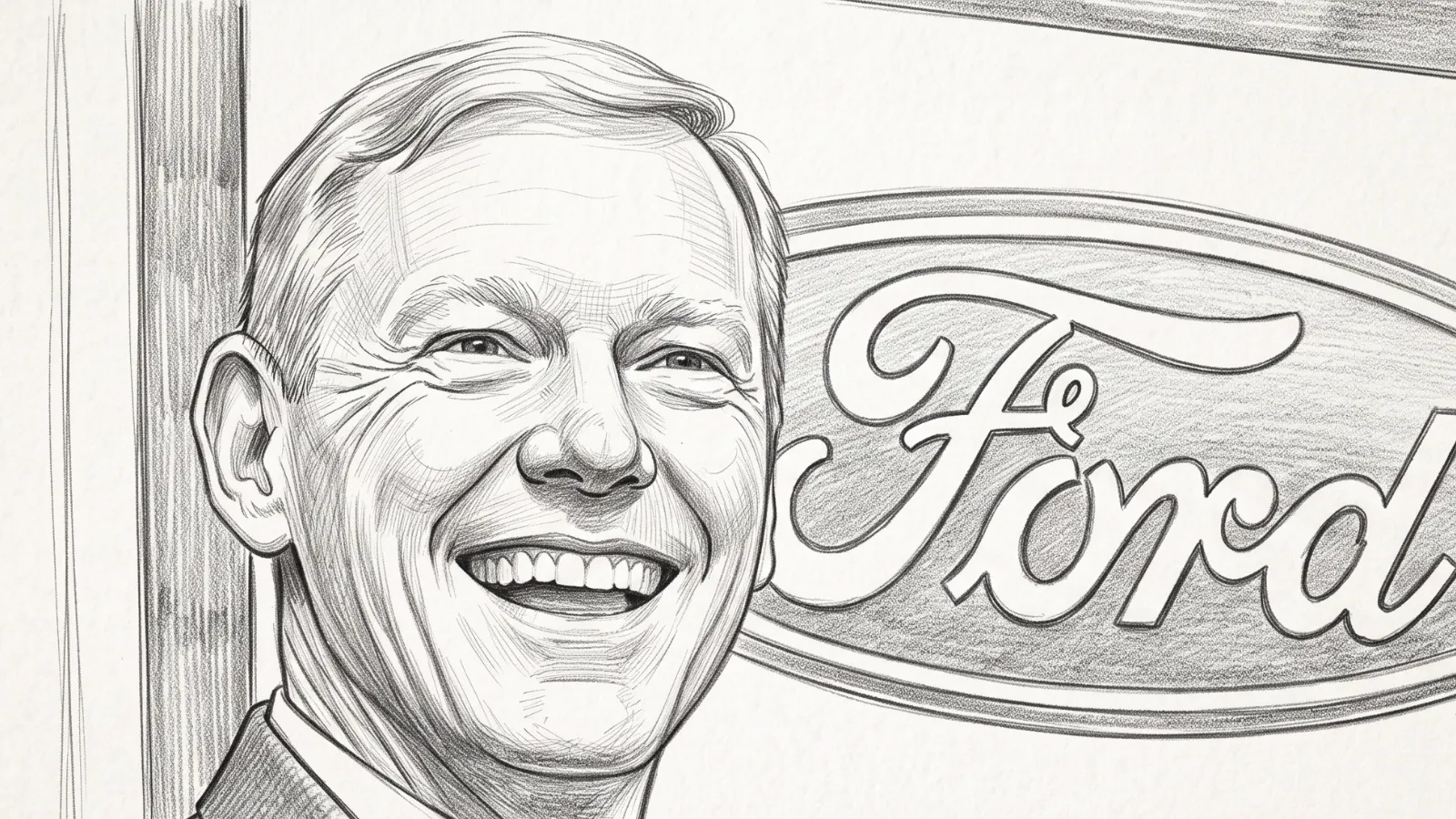
When Alan Mulally arrived at Ford in September 2006, the company anticipated a loss of $17 billion. He had never built a car. He had been recruited from Boeing by Bill Ford, great-grandson of the founder, who had tried to run the company himself and could not fix it. Ford had not hired an outsider as CEO in its 103-year history.
The culture Mulally inherited had been decades in the making. Bryce G. Hoffman, who was granted unprecedented access to Ford's leadership for his book American Icon, described it in three words: infighting, backstabbing, and excuses. Regional divisions operated as warring fiefdoms. Executives who surfaced problems were punished for it. Everyone had learned the same lesson: protect yourself, perform competence, and let someone else deliver the bad news.
Mulally's first move was a meeting.
The Sea of Green
He called it the Business Plan Review. Weekly. Mandatory. Every senior leader, in person, no surrogates. Each executive would present their division's status using a color system: green for on track, yellow for issues with a plan, red for off plan with no clear solution.
At the first several BPRs, every chart was green.
Mulally looked at the room and said: "You guys, you know we lost a few billion dollars last year. Is there anything that's not going well?"
Nobody moved. The meeting ended. Mulally walked out.
This happened week after week. Billions in losses. Green slides. Silence. The company was performing health while bleeding to death, and everyone in the room knew it, and no one was willing to be the person who said so.
The Fork
Then Mark Fields made a decision.
Fields ran Ford's Americas division. He was not a junior executive. He was not expendable. He had spent years learning the same survival instincts as everyone else in that room: read the room, manage up, keep your slide green.
But the Ford Edge, a new SUV scheduled for launch, had a technical problem with its rear liftgate latch. The vehicle was not ready. Fields could have coded it yellow, signaling concern while hedging his exposure. He could have framed the problem as contained, manageable, nearly solved. That is what the old Ford rewarded.
Fields coded his slide red.
The room went deathly silent. In the culture they all knew, showing red was not transparency. It was a resignation letter.
Mulally stood up and started clapping.
He thanked Fields for the transparency. He thanked him for the courage. Then, as Marshall Goldsmith later recounted, Mulally told the room: "Mark, you have a red. Above all else, sincere thanks for the transparency. Also, please recognize this: it's OK. Now, just to be clear, I don't have the answer to your problem either. But, good news, we have thousands of very smart people who work here at Ford. Let's get to work and find somebody who can help Mark solve this problem."
The quality chief raised his hand. The purchasing chief followed. Within minutes, a problem that had been invisible was being solved by people who, days earlier, had been too busy performing to help each other.
The following week, the BPR charts were full of color. Yellows and reds everywhere. The truth, finally, on the walls.
What Followed
The rest of the story is well documented. Mulally mortgaged every asset Ford owned, including the Blue Oval logo, to secure $23.5 billion in credit before the financial crisis hit. He sold Jaguar, Land Rover, Aston Martin, and Volvo to refocus on the core brand. He testified before Congress on behalf of his bankrupt competitors, because Ford shared 80 percent of its supplier network with GM and Chrysler and saving the industry mattered more than winning the news cycle.
Ford went from a $17 billion loss to $8.6 billion in annual profit. It was the only American automaker that did not take a government bailout. In May 2012, Moody's upgraded its credit rating, and the Blue Oval came home. Bill Ford announced it on the company PA system, which he noted was "only ever used for fire drills."
Mark Fields succeeded Mulally as CEO in 2014. Under his leadership, Ford reported its highest profits and margins in company history and distributed $9,300 profit-sharing checks to hourly employees.
The man who showed red got the job.
The Lesson
The standard reading of this story is that Mulally was a brilliant strategist who made bold financial bets and streamlined a bloated company. That is true but incomplete. The financial turnaround was a result. The transformation was the moment an entire leadership culture stopped performing and started telling the truth.
For years, Ford's executives had been doing exactly what the culture rewarded: reading the room, showing green, protecting themselves. Every decision ran through a question that had nothing to do with building better cars: Am I safe? The organization had become a hall of mirrors, every person reflecting what they thought the person above them wanted to see, until nobody in the building was saying what they actually believed.
One clap broke the mirror.
Fields was the protagonist, not Mulally. Mulally built the system. Fields was the one who had to decide, in real time, with his career on the line, whether to keep performing or start leading. He chose the work over the room. And the leader above him made sure that choice was rewarded instead of punished.
That is the whole mechanism. Enacted leadership cannot survive in a culture that punishes it. Performed leadership cannot survive in a culture that stops rewarding it. Mulally did not give a speech about honesty. He built a weekly ritual that made honesty the only viable option, and then, when someone was brave enough to go first, he stood up and clapped.
Mulally once told Korn Ferry Briefings that when he arrived at Ford, the internal forecast was for a $17 billion loss, "and at the end of the year, we achieved that loss." Ford had always been good at achieving things. Mulally just changed what it aimed at.