
Kodak, Blockbuster, and the leaders who saw it coming
In both cases, the leaders saw the disruption coming and chose not to act.
 CEO.com
9 min read
CEO.com
9 min read
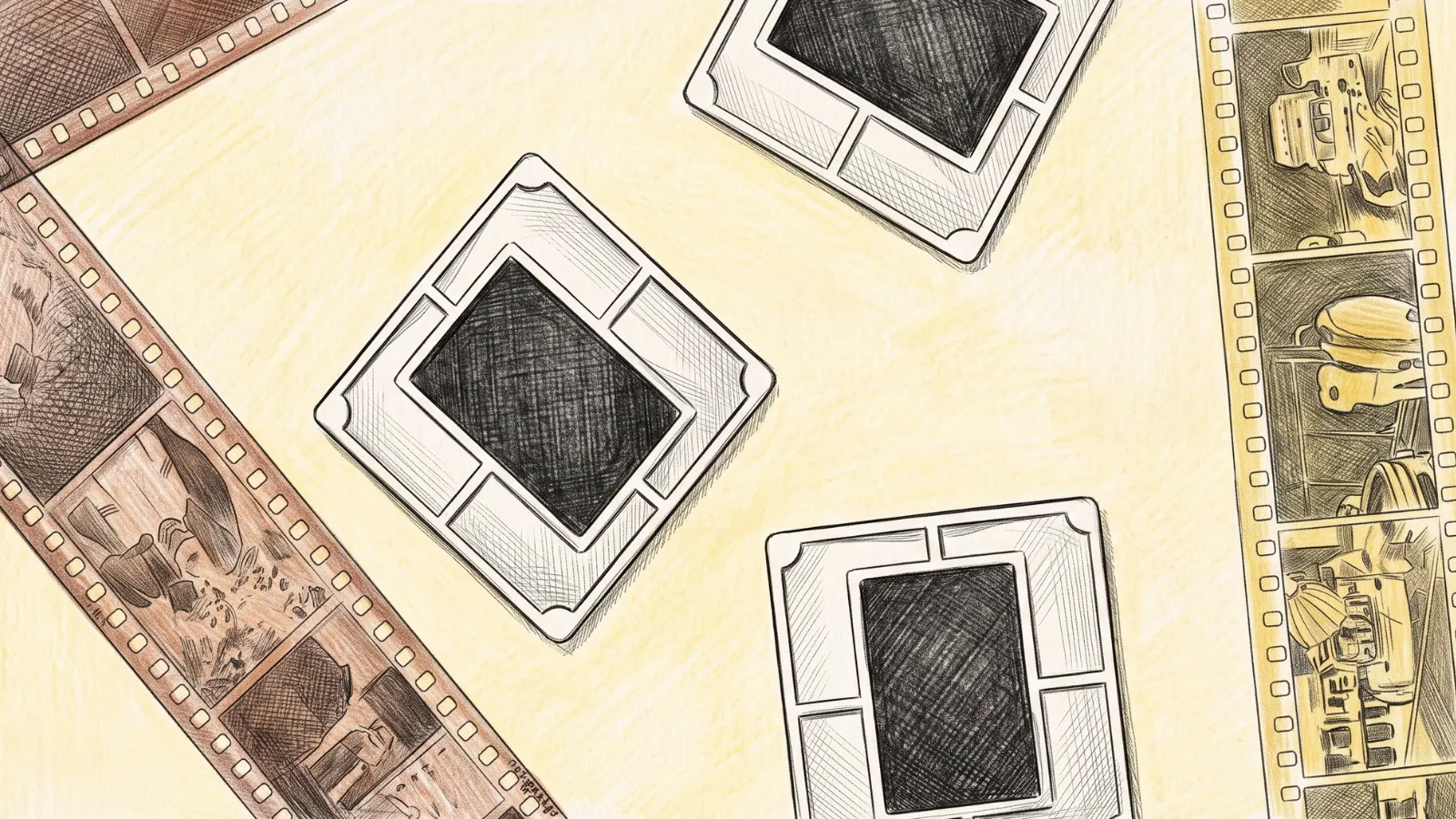
The common narrative about Kodak and Blockbuster is that their leaders were blindsided by digital disruption. The truth is more instructive and more painful. Kodak invented the digital camera in 1975. Blockbuster had an opportunity to buy Netflix for $50 million in 2000 and passed. In both cases, the leaders saw the disruption coming and chose not to act.
This case study examines the psychology of inaction in the face of disruption, drawing parallels to the current AI moment. The pattern is remarkably consistent: leaders see the threat, commission reports confirming the threat, hold strategy sessions about the threat, and then continue doing what they've always done because the core business is still generating revenue. The revenue becomes the enemy of adaptation.
The Invention That Couldn't Be Told
In 1974, a young electrical engineer named Steve Sasson was given what his supervisors at Eastman Kodak considered a throwaway assignment: investigate whether a recently developed device called a charge-coupled device could be used to capture images. Sasson had joined Kodak the year before, fresh out of Rensselaer Polytechnic Institute. He was given complete autonomy and minimal expectations.
His persistence produced something extraordinary. By December 1975, Sasson had built a device that combined a Super 8 movie camera lens, 16 nickel cadmium batteries, an analog-to-digital converter, and several dozen circuits wired together on six circuit boards. It weighed eight pounds. It captured black-and-white images at 100 by 100 pixels and stored them on a cassette tape. It was the world's first self-contained digital camera.
What happened next would define the next four decades of Kodak's trajectory.
Sasson demoed the camera for executives. He would walk into a room, take pictures of the people present before saying anything, then pop the tape into a playback unit and display the image on a television. According to Sasson's account to PetaPixel, the executives didn't ask how it worked. They asked why anyone would want to take a picture this way when there was nothing wrong with conventional photography. When Sasson estimated the technology would need 15 to 20 years to match film quality, the response was effectively: we have time.
The World Economic Forum later reported that management's reaction to Sasson's filmless photography was dismissive, treating the invention as a curiosity rather than a signal. Kodak patented the technology in 1978 but did not develop it for sale. Sasson continued working on digital imaging for the rest of his career at Kodak, developing the first prototype megapixel digital camera in 1989 alongside colleague Robert Hills. Kodak declined to sell that product too, in order to protect film sales.
This is the detail that transforms the Kodak story from a case of corporate blindness into something far more troubling. The leaders were not blind. They could see. They chose not to look.
The Revenue Trap
At its peak in the mid-1990s, Kodak controlled 90 percent of the U.S. film market and 85 percent of camera sales. In 1996, the company reported $15.9 billion in revenue, employed more than 140,000 people, and held a market capitalization exceeding $28 billion. The Kodak brand was among the most recognized in the world. The yellow box showed up in photo studios, corner stores, and family vacations on every continent.
This is where the psychology becomes relevant.
Daniel Kahneman, Amos Tversky, and Richard Thaler published a landmark paper in 1991 documenting what they called the endowment effect and its relationship to loss aversion and status quo bias. Their central finding: people weigh potential losses from changing the status quo far more heavily than potential gains. The pain of losing what you have is roughly two and a half times more powerful than the pleasure of gaining something equivalent.
Apply this to Kodak's leadership and the calculus becomes clear. Digital photography promised uncertain future gains. Film photography was generating $15.9 billion in certain present revenue. Every rational incentive, every quarterly earnings call, every bonus structure, every organizational habit pointed in one direction: protect the film business.
Kodak did eventually enter the digital camera market. By 2005, the company was actually the leading seller of digital cameras in the United States. But the margins on digital cameras were nothing like the margins on film. Kodak had built its empire on a razor-and-blade model, selling cameras cheaply and profiting from film and processing. Digital photography eliminated the blade. There was nothing recurring to sell. Each camera was a one-time transaction.
In January 2012, Kodak filed for Chapter 11 bankruptcy protection. Court filings showed $5.1 billion in assets against $6.8 billion in liabilities. Among the patents sold during bankruptcy proceedings were seminal digital imaging patents, the very technology Kodak had pioneered. The company that invented the future sold the future to survive the present.
The Meeting in Dallas
The Blockbuster story follows the same architecture, but with its own instructive details.
In September 2000, Netflix co-founders Reed Hastings and Marc Randolph flew to Dallas on a chartered plane to meet with Blockbuster CEO John Antioco. Netflix had been requesting this meeting for months. When Blockbuster finally agreed, it gave the Netflix team less than 12 hours notice, requiring them to be at the Renaissance Tower headquarters by 11:30 the following morning. As Randolph later described it, the scheduling itself communicated something about how seriously Blockbuster took the conversation.
Hastings and Randolph arrived at Blockbuster's 27th-floor conference room. Blockbuster was then a $6 billion company with nearly 9,000 stores and 84,000 employees. Netflix was unprofitable and losing money on its DVD-by-mail service. As Hastings later recalled in his book No Rules Rules, he whispered to Randolph as they entered that Blockbuster was a thousand times their size.
The proposal was straightforward. Netflix would handle Blockbuster's online operations, essentially becoming Blockbuster.com. The price: $50 million. According to Randolph's account in That Will Never Work, Antioco listened carefully throughout the pitch, nodding and making eye contact. But when the number was revealed, the room shifted. Randolph described Antioco as struggling to suppress a reaction. The answer was no.
What makes the Blockbuster story more complex than the simple version is what happened afterward. Antioco was not a passive leader content to ride the status quo into the ground. According to his own account in Harvard Business Review, once he became convinced that Netflix posed a genuine threat, he acted. He launched Blockbuster Online in 2004. He eliminated the late fees that customers hated, at a cost of roughly $200 million in annual revenue. In 2006, he introduced Total Access, a program that let customers return online rentals at physical stores for a free additional rental. Within weeks, Blockbuster was winning the majority of new subscribers and outpacing Netflix's growth.
It was working. And then it was stopped.
The investments cost roughly $400 million to implement. Profitability dropped. The stock price fell. Activist investor Carl Icahn began acquiring shares and challenged Antioco's leadership. A proxy fight followed. Antioco left the company in 2007 over a compensation dispute and strategic disagreements with the board. His successor, Jim Keyes, immediately reversed the online strategy to improve short-term profitability.
Blockbuster filed for bankruptcy in 2010. Today, one privately owned franchise location remains open, in Bend, Oregon.
Antioco later wrote that he firmly believed the online strategy would have succeeded if it had not been abandoned. The disruption was not that leadership failed to see the threat. The disruption was that the organization could not tolerate the cost of responding to it.
The Dilemma Behind the Dilemma
In 1997, a year before Antioco began his tenure at Blockbuster, Harvard Business School professor Clayton Christensen published The Innovator's Dilemma. The book's central argument has become one of the most cited ideas in business: successful companies fail not because they make bad decisions, but because they make good ones.
Christensen's framework explains why the Kodak and Blockbuster failures are not aberrations but patterns. Disruptive technologies initially appear inferior to existing products. They serve niche markets that established companies don't care about. The established company's best customers don't want the new technology. Its most reliable revenue streams don't depend on it. Every signal the organization trusts, from customer feedback to financial projections to competitive analysis, says to stay the course.
The dilemma is that the same practices that made these companies dominant, listening to customers, investing in proven technologies, maximizing returns on existing assets, become the mechanisms of their decline. Steve Jobs reportedly said the book deeply influenced his thinking. Andy Grove, CEO of Intel, called it the most important book of the decade. Marc Benioff, CEO of Salesforce, wrote the foreword to a later edition.
What Christensen described structurally, Kahneman and Tversky described psychologically. The bias toward inaction is not a character flaw. It is a feature of how the human mind evaluates risk. Samuelson and Zeckhauser's 1988 research on status quo bias found that the preference for maintaining the current state grows stronger as the number of alternatives increases and as uncertainty rises. The more complex the disruption, the more powerful the gravitational pull of doing nothing.
Kahneman and Tversky's own research demonstrated that people feel greater regret for bad outcomes resulting from action than for equivalent bad outcomes resulting from inaction. Losing money because you made a trade feels worse than losing money because you didn't. Failing because you tried a new strategy feels worse than failing because you stuck with the old one. The asymmetry is not rational, but it is real, and it operates at the level of individuals, teams, and entire organizations.
The Self-Destruct Pattern
There is a specific sequence that repeats across these stories, and it is worth naming explicitly because it is happening again right now.
It begins with invention. Someone inside the organization, or just adjacent to it, demonstrates a technology that could fundamentally alter the business. The technology is crude. It does not yet threaten the core product. Leadership acknowledges it as interesting.
Next comes assessment. Reports are commissioned. Strategy sessions are held. Consultants are hired. The conclusion is always some version of the same finding: this technology will eventually matter, but not yet. The core business is still growing. There is time.
Then comes the revenue defense. The organization begins making decisions designed to protect existing revenue rather than capture future revenue. Digital cameras are priced to protect film margins. Online rental services are underfunded to protect store profitability. AI features are bolted onto existing software to preserve per-seat licensing. The logic is always the same. The existing business is real. The future business is theoretical.
Finally comes the point of no return. The technology improves faster than predicted. New entrants who have no legacy revenue to protect move aggressively. The established company attempts to pivot, but the organizational muscle memory, the incentive structures, the customer relationships, the board expectations, and the sheer weight of quarterly earnings all resist the turn. By the time the pivot is fully committed, the window has closed.
Kodak had a 37-year head start on digital photography and still filed for bankruptcy. Blockbuster had a working online strategy that was outpacing Netflix and still filed for bankruptcy. The technology was not the problem. The pattern was.
The AI Parallel
This case study accompanies the essay AI Was the Opportunity. Now It's Also the Threat” on CEO.com, which examines the current SaaS selloff and the AI disruption facing the software industry.
The parallels are not subtle. In February 2026, the S&P 500 Software Index dropped 13 percent in five trading sessions. Salesforce lost 29 percent of its value year to date. ServiceNow shed $115 billion in market capitalization. The trigger was the same thing that triggered every prior disruption: a demonstration that a new technology could do what the old model did, faster, cheaper, and without the constraints that made the old model profitable.
The SaaS companies seeing their valuations collapse are not blind to AI. They are investing billions in it. They are building copilots, integrating large language models, and hiring AI researchers. But they are doing so within the constraints of their existing business models, just as Kodak launched digital cameras designed to protect film margins, and just as Blockbuster funded online rentals only until the cost threatened quarterly earnings.
The leaders can see the disruption coming. That has never been the hard part.
The Question
Christensen died in January 2020, three years before generative AI reached the mainstream. But the framework he spent his career building was designed for precisely this moment. The question is not whether AI will disrupt existing business models. The question is whether the leaders who see it coming will act on what they see, or whether they will follow the pattern and protect the revenue until the revenue can no longer be protected.
Kodak's Steve Sasson kept working on digital photography from the day he invented it in 1975 until the day he retired. Blockbuster's John Antioco built an online strategy that was beating Netflix and then watched someone else dismantle it. In both cases, the knowledge was there. The courage to absorb the short-term cost of acting on that knowledge was not.
The psychology of inaction is not about intelligence. It is not about vision. It is about the willingness to endure the pain of transition while the existing business is still generating revenue. It is about choosing the uncertain future over the certain present. It is about leading through the valley where the old model is dying and the new model has not yet proven itself.
That valley is where most leaders lose their nerve. And that valley is where we are right now.