
The Nadella transformation: Reengineering Microsoft's leadership DNA for the AI era
How a cultural architect became an AI pioneer — and what every CEO can learn from Microsoft's $3 trillion metamorphosis
 CEO.com
5 min read
CEO.com
5 min read

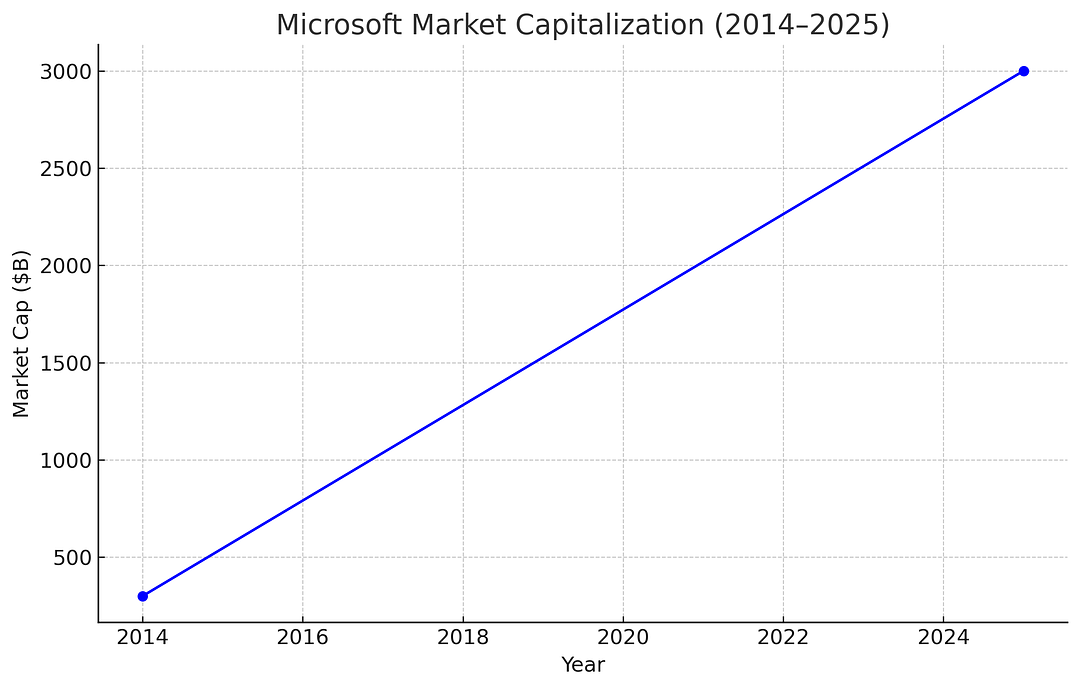
In the pantheon of corporate transformations, few rival the systematic reimagining of Microsoft under Satya Nadella. When the soft-spoken engineer assumed the CEO role on February 4, 2014, he inherited a $300 billion company trapped by its own success — dominated by internal competition, anchored to declining Windows revenues, and increasingly irrelevant in a mobile-first world.
Today, Microsoft commands a $3 trillion market capitalization and leads the enterprise AI revolution through an unprecedented $80 billion infrastructure investment. The transformation provides CEOs a master class in managing technological disruption while achieving outstanding shareholder returns.
But Nadella's approach defied traditional thinking. Instead of focusing on technology or strategy first, he emphasized something more basic: the human operating system that influences organizational behavior.
The Paradox of Success
Microsoft's challenges in 2014 exemplified what Harvard Business School professor Clayton Christensen called the "innovator's dilemma" — market leaders struggling to adapt when disruptive technologies emerge. The company's Windows-centric culture had created what Nadella diagnosed as a "know-it-all" mentality that prioritized defending existing markets over exploring new possibilities.
Internal competition flourished. Product teams operated in silos. Risk aversion dominated decision-making. Employee engagement scores reflected an organization where individual performance mattered more than collective achievement.
The Leadership Challenge: How do you transform an established organization's DNA while maintaining operational excellence and market position?
Nadella's Insight: Cultural transformation must precede technological transformation. Organizations cannot adapt to external disruption without first changing internal operating principles.
The Growth Mindset Revolution
Drawing inspiration from psychologist Carol Dweck's research, Nadella anchored Microsoft's transformation in what he termed a "learn-it-all" culture. The shift represented more than motivational rhetoric — it required systematic changes across 220,000 employees in 90 countries.
Structural Implementation:
- Performance Systems: Rewrote evaluation criteria to emphasize learning and collaboration over individual achievement
- Management Philosophy: Transformed managers from evaluators to coaches, encouraging experimentation and learning from failure
- Organizational Design: Dismantled departmental silos that fostered internal competition
- Decision Rights: Empowered cross-functional teams to make rapid decisions without hierarchical approval
Measurable Outcomes:
Within three years, employee engagement scores improved significantly while innovation cycles accelerated across product lines. The cultural transformation created organizational capacity for the technological disruption that followed.
CEO Implication: Cultural change provides the foundation for strategic agility. Organizations with fixed mindsets cannot adapt to dynamic competitive environments.
Strategic Foresight: The OpenAI Partnership
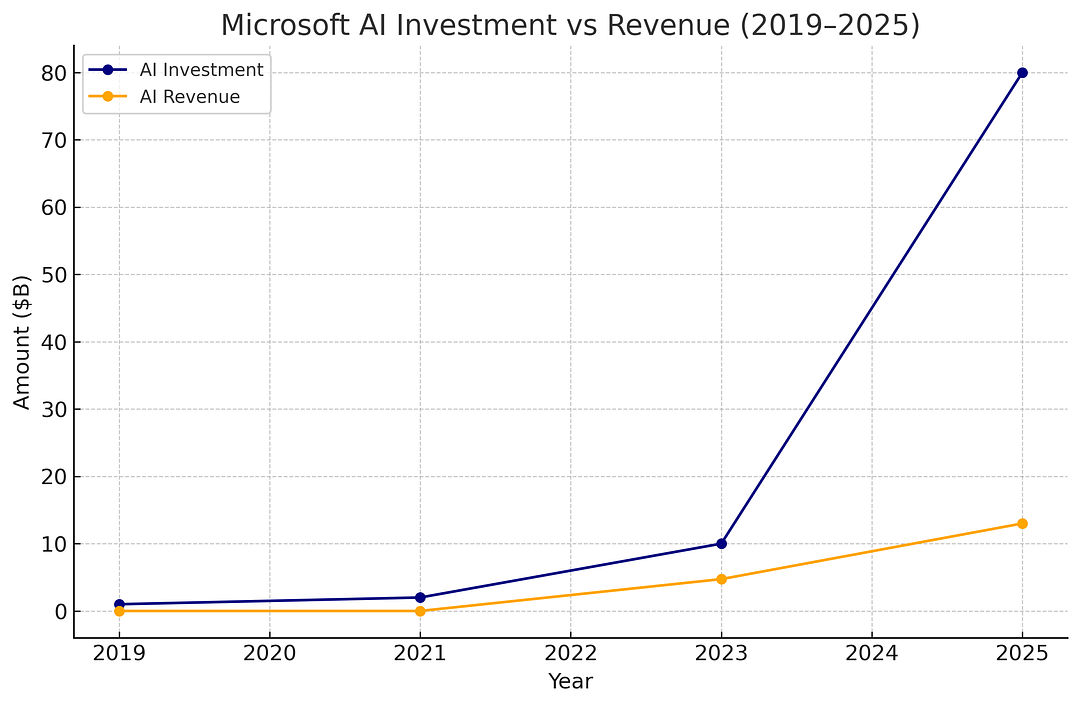
While competitors focused on incremental improvements to existing products, Nadella made a series of asymmetric bets on emerging technologies. The most consequential was Microsoft's partnership with OpenAI, beginning with a $1 billion investment in 2019.
Partnership Architecture:
- Exclusive Infrastructure Rights: Microsoft became OpenAI's sole cloud provider, ensuring access to breakthrough AI models
- Technology Integration: Secured rights to embed OpenAI's capabilities across Microsoft's product portfolio
- Financial Structure: Staged investments ($1B in 2019, $2B in 2021, $10B in 2023) aligned with technological milestones
Strategic Timing:
The partnership positioned Microsoft ahead of the generative AI boom that emerged in 2023-2024. By 2025, the OpenAI relationship was generating $13 billion in annual AI revenue — a 175% year-over-year increase.
CEO Framework: Strategic partnerships can accelerate capability development faster than internal R&D. The key is structuring relationships that provide access to breakthrough technologies while maintaining strategic control.
Capital Allocation: The $80 Billion Infrastructure Bet
Nadella's approach to AI infrastructure investment demonstrates sophisticated capital allocation during technological transitions. The $80 billion commitment represents the largest single-year AI investment in corporate history.
Investment Philosophy:
- Long-term Assets: More than half targets "long-lived assets supporting monetization over 15+ years"
- Demand-Driven Spending: Investments correlate with contracted business demand rather than speculative capacity
- Portfolio Approach: Balances proven technologies with experimental innovations
Investor Communication:
Nadella established specific metrics for evaluating AI investment returns, including infrastructure utilization rates, contracted demand growth, and integration across product portfolios. This transparency helped investors understand that massive capital deployment was strategic rather than speculative.
CEO Principle: During technological transitions, capital allocation requires different frameworks than traditional ROI calculations. Future value creation may require accepting short-term margin compression.
Organizational Architecture: Building AI-First Capabilities
Microsoft's AI integration strategy illustrates how established companies can embed new technologies without disrupting existing operations. Rather than creating separate AI divisions, Microsoft embedded capabilities into workflows customers already used daily.
Integration Methodology:
- Customer-Centric Design: AI features enhance existing applications (Office, Teams, Azure) rather than requiring new adoption
- Platform Strategy: Open ecosystem approach supports diverse technologies and partnerships
- Gradual Migration: Customers experience AI benefits without operational disruption
Business Results:
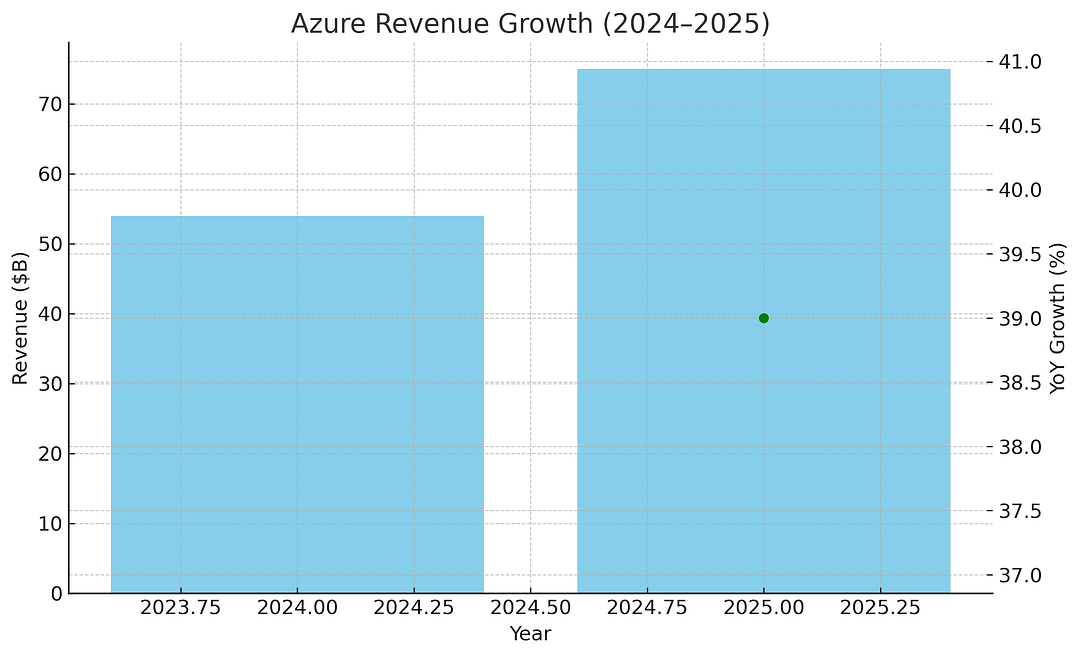
Microsoft's Azure platform achieved $75 billion annual revenue with 39% year-over-year growth, while overall quarterly revenue reached $76.4 billion with net income growing 24%.
CEO Application: Technology integration succeeds when it reduces rather than increases customer friction. The most powerful innovations often feel invisible to users.
Leadership During Uncertainty: Managing Stakeholder Expectations
Nadella's management of stakeholder relationships during Microsoft's transformation provides a framework for CEOs navigating similar transitions.
Employee Engagement:
- Maintained workforce stability during AI implementation, focusing on retraining rather than replacement
- Emphasized empathy as a strategic leadership skill for understanding diverse stakeholder needs
- Created psychological safety for experimentation and failure
Investor Relations:
- Provided clear frameworks for evaluating uncertain returns on AI investments
- Demonstrated patience with long-term value creation while delivering consistent short-term results
- Maintained transparency about both opportunities and challenges
Customer Trust:
- Abandoned proprietary ecosystem lock-in for platform-agnostic strategies prioritizing customer needs
- Enabled Microsoft Office to thrive on competitors' platforms (iOS, Android)
- Built AI capabilities that enhance rather than replace human decision-making
The CEO's Strategic Playbook
Nadella's transformation offers actionable insights for executives leading organizations through technological disruption:
1. Cultural Architecture Precedes Technology
Organizational culture determines how effectively companies can adapt to external change. Establishing a "learn-it-all" mentality creates capacity for innovation that fixed mindsets cannot support.
2. Strategic Partnerships Accelerate Capability Development
Internal R&D alone cannot match the pace of technological change. Strategic partnerships provide access to breakthrough capabilities while maintaining competitive control.
3. Capital Allocation Requires Future-Oriented Frameworks
Traditional ROI calculations may not capture value creation during technological transitions. CEOs must structure investments as portfolios with varying risk profiles and time horizons.
4. Integration Strategy Determines Technology Adoption
The most successful technology implementations feel invisible to users. Integration that reduces rather than increases friction accelerates adoption and value realization.
5. Leadership Philosophy Enables Transformation
Empathetic leadership and transparent communication build stakeholder trust during uncertainty. CEOs must balance confidence in vision with humility about execution challenges.
Implications for CEO Decision-Making
Microsoft's transformation demonstrates that successful navigation of technological disruption requires CEOs to function as "chief transformation officers" who can manage multiple constituencies while maintaining operational excellence.
Critical Success Factors:
- Establish transformation as a CEO-led initiative rather than delegating to technology teams
- Balance short-term performance with long-term strategic positioning
- Maintain transparency about both opportunities and challenges
- Build organizational cultures that embrace rather than resist change
Risk Management:
- Structure transformation as a portfolio of investments rather than a single bet
- Maintain operational excellence while pursuing strategic innovation
- Develop clear metrics for evaluating progress on uncertain outcomes
The Future of Enterprise Leadership
As artificial intelligence continues to reshape competitive landscapes, Nadella's approach offers a blueprint for traditional enterprises aiming to become AI-first organizations. The transformation from a struggling software vendor to an enterprise AI leader illustrates how visionary leadership can navigate technological disruption while achieving exceptional business results.
For CEOs facing similar challenges, the Microsoft model offers proof that cultural transformation, strategic foresight, and disciplined execution can create sustainable competitive advantages even in rapidly evolving markets.
The question for enterprise leaders is not whether AI will disrupt their industries, but whether they can transform their organizations fast enough to lead rather than follow the disruption.