
The shift from "Can we build it?" to "Do we understand what should be built?"
The bottleneck was technical access.
 CEO.com
4 min read
CEO.com
4 min read
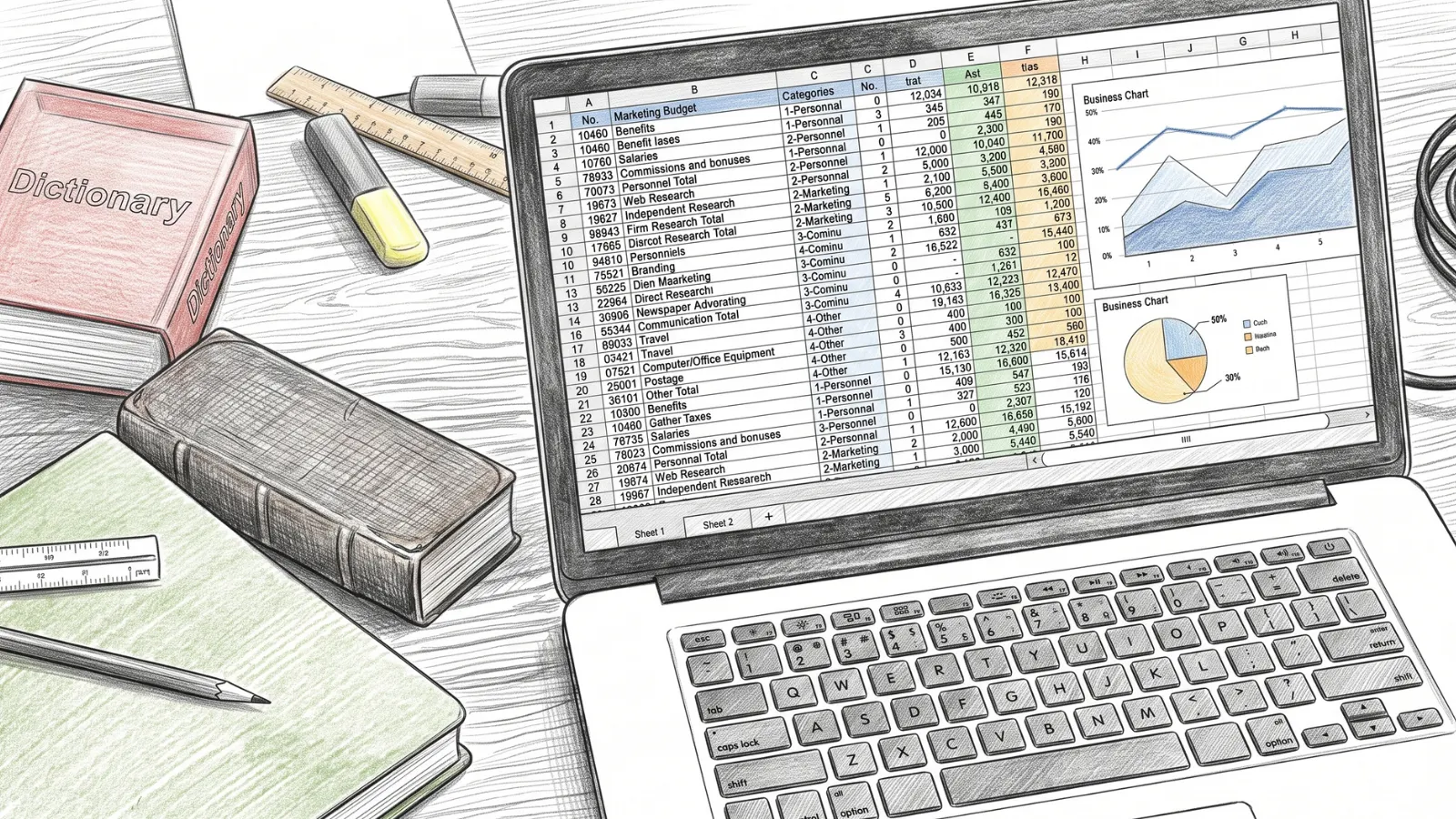
In the spring of 1978, Dan Bricklin sat in a Harvard Business School classroom watching his professor build a financial model on a blackboard. The blackboard was ruled with vertical and horizontal lines to create a grid. The professor wrote formulas and data into the cells. When he found an error or wanted to change a parameter, he had to erase and rewrite several sequential entries by hand.
This was how financial modeling worked. It had worked this way for centuries. Accountants and analysts used paper ledgers, pencils, and calculators. Changing a single number required recalculating everything downstream. A 20-hour task stretched across days. The people who understood the business were hostage to arithmetic.
Larger companies had access to financial modeling software on mainframes and timesharing systems. But these systems cost $20,000 or more and required learning specialized languages. They were tools for technical specialists, not business people. The person who understood the business couldn't build the model themselves. They had to explain what they wanted to programmers who translated it into something the machine could run.
The bottleneck was technical access.
The Breakthrough
Bricklin had been a programmer before business school. Watching his professor erase and recalculate, he had a thought: what if you could do this on a computer, with a single change automatically recalculating everything else? He called his MIT friend Bob Frankston, and over the winter of 1978-79, they built VisiCalc in an attic in Arlington, Massachusetts.
VisiCalc launched on October 17, 1979, for the Apple II. It cost $100. The Apple II cost $2,000. People bought the software first, then bought the computer to run it.
Ben Rosen, the venture capitalist, speculated in July 1979 that "VisiCalc could someday become the software tail that wags (and sells) the personal computer dog." He was right. During the 12 months VisiCalc ran exclusively on the Apple II, an estimated 25% of all Apple II sales were made specifically to run VisiCalc. Steve Wozniak later said that small businesses, not the hobbyists he and Steve Jobs had expected, purchased 90% of Apple IIs.
Steve Jobs put it simply: "VisiCalc propelled the Apple II to the success it achieved more than any other single event."
VisiCalc became the first "killer app." The term was invented to describe it: software so valuable that people bought hardware just to use it. More than 700,000 copies sold in six years. The personal computer crossed from hobbyist toy to business tool.
What Actually Changed
The important thing about VisiCalc wasn't the technology. It was who could use it. As technologist Stewart Alsop wrote in 1984, VisiCalc "empowered thousands of business managers to escape the data processing department for mundane planning work."
Before VisiCalc, the person who understood the business couldn't build financial models without technical help. After VisiCalc, they could. The constraint shifted from "can we build it?" to "do we understand what should be built?"
Steven Levy, writing about the shift, observed that VisiCalc "changed the perception of a spreadsheet from a document of hard costs into a modeling tool by which one tested business scenarios." The spreadsheet wasn't just faster arithmetic. It was a new way of thinking. What-if analysis became possible. You could change an assumption and instantly see the consequences ripple through the model.
Accountants didn't disappear. Financial analysts didn't disappear. They moved up the complexity ladder. But the basic act of building a financial model no longer required technical gatekeepers. The person with domain expertise could finally translate their understanding directly into the tool.
The Rise and Fall
VisiCalc's dominance didn't last. In 1983, Mitch Kapor, a former VisiCorp employee, released Lotus 1-2-3 for the IBM PC. It had better features, ran faster, and was backward compatible with VisiCalc files, so users could switch easily. Sales of VisiCalc halted almost immediately. By 1985, VisiCorp was bankrupt. Lotus acquired VisiCalc and discontinued it.
Bricklin couldn't patent VisiCalc. At the time, software patents were rarely granted. As he later wrote, a patent attorney told him there was only a 10% chance of success, and the costs weren't worth it. The idea that anyone could build their own financial models spread without protection.
Lotus 1-2-3 eventually gave way to Microsoft Excel. Excel gave way to Google Sheets and a dozen other tools. The specific products came and went. What remained was the shift in who got to participate.
In 1999, Harvard Business School renamed a classroom in Bricklin's honor. The plaque reads: "Forever changed how people use computers in business."
The Lesson
VisiCalc didn't eliminate accountants. It changed what they spent their time on. It didn't make financial expertise irrelevant. It made financial expertise more accessible to people who had it but couldn't previously express it in a model.
The parallel to the current moment is hard to miss.
Before VisiCalc, the person who understood the business needed programmers and mainframe access to build financial models. After VisiCalc, they needed a $2,000 computer and a $100 piece of software. The bottleneck broke. The constraint shifted from technical access to domain expertise.
Today, the person who understands their business often needs developers to build the software they need. They can describe exactly what they want, but they can't build it themselves. They're hostage to technical resources the same way accountants were once hostage to arithmetic.
AI coding tools are doing to software what VisiCalc did to financial modeling. They're breaking the bottleneck. They're shifting the constraint from "can we build it?" to "do we understand what should be built?"
Developers won't disappear, just as accountants didn't disappear. They'll move up the complexity ladder. But the basic act of building software is becoming accessible to people who understand problems but couldn't previously translate that understanding into code.
The yoga studio owner describing her booking system. The HVAC company integrating their scheduling with inventory. The restaurant owner building something better than the generic point-of-sale system. These are the equivalents of the business manager who could finally build their own financial model in 1979.
The bottleneck is breaking again.