

The weight of 200,000 jobs: A case study in leadership responsibility during the 2023 tech layoff wave
"I take full responsibility for the decisions that led us here."
 CEO.com
7 min read
CEO.com
7 min read
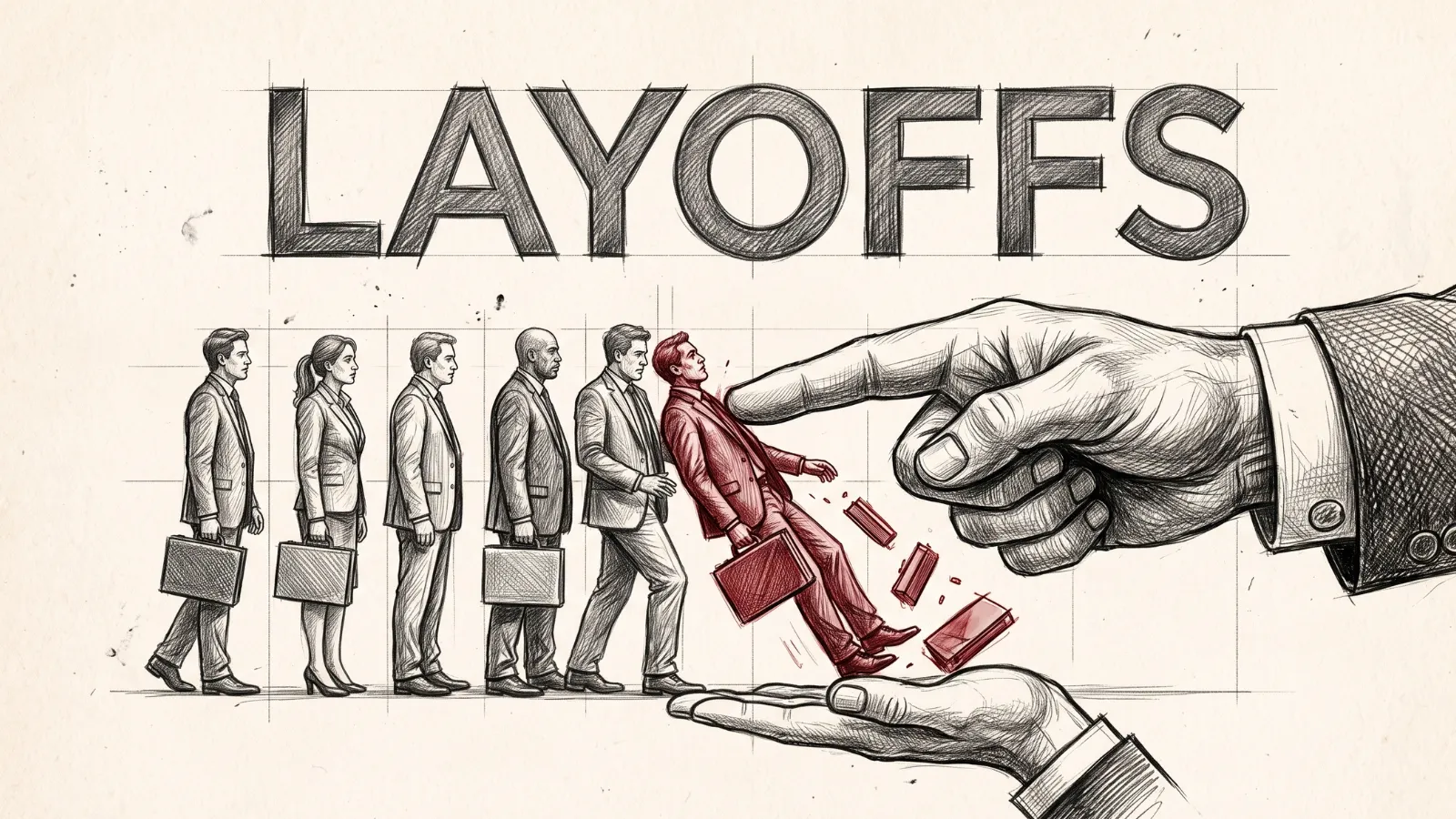
Between November 2022 and March 2023, something unprecedented happened in Silicon Valley. Four of the world's most valuable companies laid off nearly 40,000 workers in rapid succession. By the end of 2023, the number exceeded 200,000 across the tech sector, according to Crunchbase's tech layoff tracker.
The numbers tell one story. Meta cut 21,000 jobs across multiple rounds. Google eliminated 12,000 positions. Microsoft let go of 10,000 workers. Amazon shed 27,000 employees. These were not struggling companies on the verge of collapse. Microsoft pulled in $16.4 billion in profit in the quarter it announced layoffs. Meta, despite a 52% decline in profits, still generated $4.4 billion. Amazon had the cash reserves to offer $69 billion for Activision Blizzard.
What made this moment notable was not just the scale but the uniformity of the response. As NPR reported, Meta CEO Mark Zuckerberg's layoff announcement "created something of a playbook" that others followed: cite overzealous pandemic hiring, nod to broader economic conditions, and then use nearly identical language to communicate the cuts.
The Language of Abdication
"I take full responsibility for the decisions that led us here." Sundar Pichai wrote those words in his memo to Google employees. Mark Zuckerberg used similar phrasing: "I want to take accountability for these decisions and for how we got here. I got this wrong, and I take responsibility for that." Spotify's Daniel Ek echoed: "I take full accountability for the moves that got us here today."
The phrases were so similar they prompted journalists to ask why. As Fortune reported, PR experts suggested the language was "carefully crafted to balance strong leadership with empathy." But employees saw through it. One disgruntled Google worker asked before a town hall meeting: "What does taking full responsibility entail? Responsibility without consequence seems like an empty platitude."
Tech columnist Jason Aten articulated the problem in Inc. Magazine: "Pichai says he 'takes full responsibility,' but responsibility without accountability is meaningless. Pichai isn't losing his job. Neither did Satya Nadella at Microsoft, or Marc Benioff at Salesforce, or Mark Zuckerberg at Meta." Aten proposed a rule: "If you are the CEO of a public company and you have to lay off more than one percent of your employees, your salary is automatically frozen for three years and you give up any stock earnings during that time. It's only reasonable that if you're trying to save expenses by letting go of that much staff, the CEO should share in that pain."
The critique cuts to a fundamental question: What does responsibility actually mean if the person claiming it faces no consequences while thousands of others lose their livelihoods?
The Hidden Costs
The damage extended far beyond those who lost their jobs. Research by Leadership IQ found that 74% of employees who kept their jobs reported declining productivity following layoffs. 64% said their colleagues' productivity also declined. 77% observed more errors and mistakes.
Professor Joel Brockner's research, cited in multiple studies of layoff survivors, found that those who remain frequently develop what he calls a "cocktail of negative emotions: anger, depression, fear, distrust, and guilt," resulting in reduced performance and higher absenteeism.
At Google, employees openly reported a "significant decline in morale" and "increased distrust" toward leadership after the 2023 cuts. As workplace mental health expert Sally Spencer-Thomas told CBS News, "It creates a lot of paranoia, and because of that, you get a lot of distrust within an organization with these large-scale layoffs. Workers will question if the organization has their well-being at heart or if they are only looking at profit-making."
Harvard Business School research confirms the pattern. Professor Sandra Sucher, who has studied layoffs extensively, found that "job cuts rarely help senior leaders achieve their goals. Too often, they're done for short-term gain, but the cost savings are overshadowed by bad publicity, loss of knowledge, weakened engagement, higher voluntary turnover, and lower innovation, which hurt profits in the long run."
A study of 146 companies that conducted layoffs showed it often takes years, not months, for engagement, morale, and loyalty to rebound.
What Genuine Responsibility Looks Like
The contrast between the 2023 tech layoffs and other approaches to workforce reduction is instructive.
Satoru Iwata, Nintendo (2013): When Nintendo's Wii U console failed and the company faced years of losses, CEO Satoru Iwata took a 50% pay cut rather than lay off employees. Board members took 20% cuts. His reasoning was explicit: "If we reduce the number of employees for better short-term financial results, employee morale will decrease. I sincerely doubt employees who fear that they may be laid off will be able to develop software titles that could impress people around the world." Nintendo retained its talent, developed the Switch, and sold over 139 million units.
Honeywell (2008): During the recession, Honeywell chose furloughs over layoffs, preserving jobs while reducing costs. The company emerged with its workforce intact and its culture stronger.
Nokia's Bridge Program: When Nokia needed to reduce headcount by 18,000 employees across 13 countries, the company built an extensive program to help workers transition. It offered support for those starting businesses, pursuing education, and finding new jobs. The cost: approximately 2,800 euros per employee. Compare that to a previous plant shutdown in Germany, where abrupt layoffs of 2,300 employees cost 700 million euros in lost sales and 100 million euros in profit, nearly 30 times as expensive per person affected.
Airbnb (2020): When COVID-19 decimated travel, Airbnb CEO Brian Chesky had to lay off 25% of the workforce, about 1,900 people. His approach became a case study in compassionate communication. He wrote the layoff letter personally, using human language rather than corporate jargon. He explained exactly how decisions were made. He provided 14 weeks of severance plus one additional week per year of service, 12 months of health insurance, accelerated equity vesting, and an Alumni Talent Directory to help departing employees find new jobs. He converted a significant portion of Airbnb's recruiting team into an alumni placement team.
As Chesky later reflected on the Adam Grant podcast: "I would rather say a couple of wrong things and embarrass myself, but at least people know I'm speaking from the heart, than execute it coldly and perfectly."
The Framework for Responsible Leadership
Harvard Business School's Sandra Sucher has developed extensive research on how to handle workforce reductions responsibly. Her framework offers several principles:
1. Exhaust alternatives first. Before layoffs, responsible companies explore furloughs, reduced hours, voluntary unpaid leave, redeployment, reskilling, job sharing, and executive pay cuts. Layoffs should be a last resort, not a first response.
2. Understand legal and cultural contexts. Different countries have different requirements for layoffs. Companies operating globally must navigate these carefully and plan accordingly.
3. Develop a clear philosophy. Companies that handle layoffs well have thought deeply about their obligations to employees before crisis hits. Sucher cites Michelin, which vows to "restructure during good times, rather than bad times" because they want to ensure they have the financial resources to treat people fairly.
4. Communicate transparently and personally. Airbnb's Chesky wrote his own letter. He explained the business context, the decision process, and exactly what affected employees would receive. He addressed both those leaving and those staying. He used human language. PR agency CEO Debbie Zaman advises: "Considering ways of delivering some greater degree of transparency rather than the fallback line of 'full responsibility' can help give a sense of treating teams with respect."
5. Provide genuine support. Severance, extended healthcare, job placement assistance, alumni networks. Nokia's Bridge program and Airbnb's talent directory represent what genuine investment in departing employees looks like.
6. Share the pain meaningfully. When Intel's CEO took a 25% pay cut and reduced executive salaries by 15% to avoid broad layoffs, it signaled shared sacrifice. When CEOs announce massive layoffs while retaining their full compensation packages, the message is quite different.
7. Address survivors' needs. The remaining workforce faces guilt, anxiety, and increased workload. Acknowledging these emotions, providing mental health resources, and being present as a leader matters enormously. As one manager told researchers: One leadership response was essentially "be grateful, now work," which bred quiet fury. Another RIF, handled differently, involved a team meeting acknowledging the difficulty, encouraging discussion, and granting permission to not be 100% productive. That empathy significantly helped maintain morale.
The Deeper Question
Sucher frames the fundamental issue plainly: "We're in a crisis of trust in leadership. Leaders of all kinds are failing some of the basic expectations that people have for how they should be treated."
The 2023 tech layoffs revealed something about how many leaders conceptualize their role. When pandemic-era growth reversed, the response was immediate: shed workers to protect margins and reassure investors. The language of responsibility was deployed, but the substance was absent.
The alternative is not that layoffs should never happen. Sometimes they are unavoidable. The question is whether leaders carry the weight of those decisions or find ways to avoid feeling it. Whether they treat employees as human beings with families and futures or as line items to be optimized. Whether they exhaust alternatives or reach for the easiest solution. Whether they share sacrifice or preserve their own position while asking others to bear the cost.
As one tech industry analysis noted: "The blame rests squarely on the shoulders of their CEOs. As the sole person in charge, they're responsible for misjudging the macroeconomy, making terrible investments, and then following along with the industry in a shortsighted attempt to please Wall Street. And yet, despite a smattering of pay reductions, none of them have faced real consequences."
Conclusion: The Weight That Leaders Owe
The 2023 tech layoffs will be studied for years as an example of what happens when an industry moves in lockstep, when leaders follow playbooks rather than principles, and when the language of responsibility substitutes for the substance of accountability.
The research is clear: layoffs often fail to achieve their stated goals, damage company culture for years, and cost more than they save when hidden costs are factored in. The leaders who handle workforce reductions well are those who see employees as human beings first, exhaust alternatives, communicate with honesty and humanity, share in the sacrifice meaningfully, and invest genuinely in helping affected workers land on their feet.
The weight of leadership is not optional. The only question is whether leaders carry it consciously or find ways to set it down. The 2023 tech layoffs showed us what happens when an entire industry chooses the latter.
Sources: NPR, Fortune, Inc. Magazine, CNBC, Harvard Business School Working Knowledge, Harvard Business Review, CBS News, Crunchbase, Leadership IQ, Employee Benefit News, Airbnb Newsroom